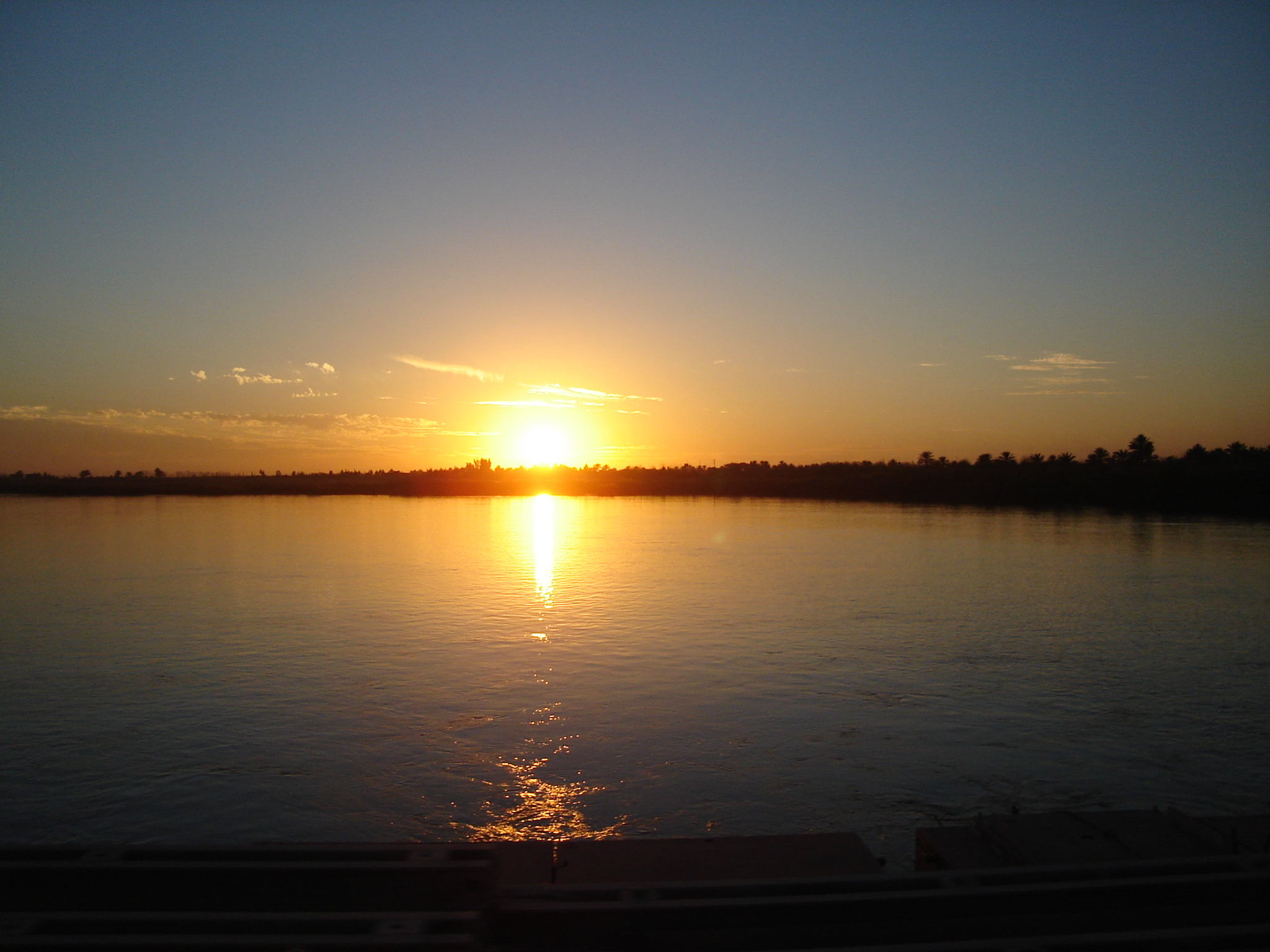
Sunset over the Tigris – Diyala province, Iraq 2006 – Maxine I. J. Filcher
Skies over the Tigris
By
Maxine I. J. Filcher
When I willfully recall my time in Iraq, I often prefer to start with the less fatalistic memories, like those about sunsets, and the way they would deliver hopeful emotion to my heart. White cumulus clouds would occasionally build massive structures in the sky, while behind their grandeur; beams of light radiating from the sun seemed to suggest that I left boot prints in consecrated ground. Above our madness: an otherworldly majesty, and mesmerizing spectrum of bright pinks, and purples contrasted against slowly advancing hues of deep blue. Iraqi skies seemed to recall an entirely different story, than back in Arkansas. The air and land softly spoke to each other, in a language unfamiliar to my ear; the wind and sand constantly beckoned me to interpret their ceaseless conversation.
My memories sometimes move from those skies that hung silently, to the land –innocent – wounded, punished simply for being mother earth. I recall how my body felt crushed by history as I stood in a place that had known a sort of timeless conflict few parts of our planet could attest to. Alexander’s glorious armies left their footprints –and blood– on those very battlefields, in the 3rd century BCE, as did the Babylonians and Persians centuries before that. Ancient soldiers carrying shields and spears, bodies chiseled by years of intense warfare and unimaginable miles marched; cavalry and chariots abreast in all their glory and ferocity. The mass of those armies surely creating epic clouds of dust that whipped into the sky, blotting out the sun. The same dust our Humvees had kicked back into the skies over the Tigris as we raced across arid plains, patrolling the emptiest of places. Those ghostly armies seemed to join our formations and fight their battles all around us; the pistons of our vehicles would viciously beat in rhythm with phantom war drums. Their flags and banners, alongside ours and flapping in a sacred wind, welcomed our presence to a never-ending timeline of human combat, and bloodshed in that sun-scorched land. The magnitude of that ancient history has taken nearly a decade to come to terms with, but there, in that time, I could somehow feel it all deep down in my core; I could almost hear the whispering echoes of desolation reverberate off the desert itself.
I make a point to remember the exceptionally beautiful sunsets over the Tigris, and my constant struggle to capture the perfect image of it from my gun turret, as our lightly armored convoys made a mad dash for the safety of Forward Operating Base Spartan (later renamed F.O.B. Grizzly). Sunsets always meant a desperate, fleeting race against nightfall, as it exposed our convoys to a greater risk of ambush in the sometimes-tight streets of places like, Balad, and Al Khalis. The absence of day light only complicated civilian traffic that would become chaotic and confused when our trucks approached, often resulting in injuries to noncombatants, as cars clustered together or attempted to navigate around our convoys, and were subsequently rammed or shot at by our lead vehicles. We would rush back across temporary steel pontoon bridges, hurriedly constructed during the invasion, moored in place by cables stretching out to concrete anchors on the shoreline. Every bolt and hinge cried out in protest to the immensity of our vehicles rolling across their creaking, aching backs. Any who attempted the crossing were required to wait, single file, as three vehicles at a time braved the unsteady span. Seatbelts unbuckled; hands placed on door latches, in the hopes that if the bridge failed we could somehow escape the sinking vehicle, remove the encumbrance of gear, and swim to shore –but what then?
Crossing those windswept desserts, the great Tigris River must have seemed like an oasis to ancient armies. From what I understood, currents of the small river’s muddy waters were quite strong; undoubtedly, many soldiers have drowned fording the quick flowing Tigris. Along its length, the low banks of the winding river, lined with patches of scrub brush, accented by reeds and cattails, looked like a combination between the rivers of Wyoming or Montana, mixed with the murky brown water of tributaries in the American south I have become familiar with –and longed to see again. The impermanence of our temporary bridges spanning that river seemed concentrated by the prehistoric waterway, twisting itself through the dry heat of the desert, mimicking a serpent, franticly searching for shelter from the constant beating oppression of the sun.
No matter how much I resist, the more sinister memories of Iraq always flood in and I swell with recollections from life inside –and outside- the wire. Once the front gates of our tiny plot of land in the dessert came into view, tension levels would dramatically decrease and everyone could somehow relax into a lessened state of alertness. I would come to think of the perimeter as a razor-wire security blanket; the danger outside was palpable –unstoppable. We sometimes knew when an attack was imminent. This was preferred, as our fire-teams could then mobilize and engage the enemy in the empty expanse of the desert, using our ability to see in the dark and the element of surprise to overwhelm any threat. Out there amongst the dunes with our thermal scopes and night vision, the darkness of night belonged to us. Our formations and movements in the desolate terrain became some mad dance performed for the musing of the ancient warriors who still somehow remained there, in constant audience to the depravity of humans.
Iraqi nights had an entirely different beauty about them. Being from western Montana I would like to think I know what a beautiful starry night looks like, but somehow there, the nights felt older, as if the screams of human pain had broadcasted into the air since the dawn of time. From the turret hatch of the Humvee roof, I watched countless twinkling stars, and ancient constellations dance across the sky. Tracer fire and distant explosions would intermittently break the timeless rhythm and marching of the stars. The nomadic sent of smoke and battle would quietly creep across the land, taking hostage our imaginations. It was not unusual to see the glow of after-burners streak across the night’s sky, as “fast movers” took off from LSA Anaconda to drop ordnance on distant targets. In some insane, twisted way, it often reminded me of July Fourth celebrations as a child; I would become nostalgic and home sick for those summer nights filled with family and friends, laughing and celebrating with each other, as we shared the obligatory BBQ due all good American patriots on that date. The summer nights of childhood felt so far away from my gun turret.
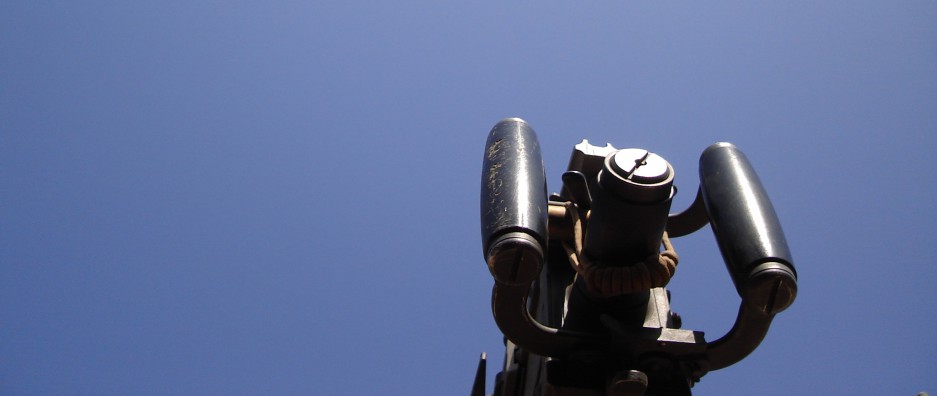
I had to look into the sky; I had to forget the awful things we were doing to each other down below on earth. I had to distance myself from my thoughts and actions while holding on to the massive Browning .50 caliber machine gun I had dubbed Medusa. Regardless of my efforts, faces of the Iraqi people haunted me then as much as they do now. Their piercing gaze from empty eyes testifying to the hopeless situation Iraq existed in. Now, looking back to the places I called home in Iraq, I prefer to think of the land and the sky, or ancient lost cities and battlefields where long dead — but ever-present, armies still fight each other. Even with the passing of time, I seem to ask myself often, are we still out there in the Iraqi deserts? Will our conflict continue to echo along with the countless others? Every night, while I sleep, I still patrol that ancient place, clad in heavy body armor, mounted in my diesel chariot. The sand and dirt still clings to my hair, it still grinds between my teeth, and builds up beneath my fingernails. Iraqi lands and skies still speak to me in my dreams and somehow are an ever-present part of me. So I guess in some miserable way, regardless of if we continue to fight on in those battlefields, the ancient battlefields of Iraq will continue to be fought over inside of us — the ones who left our boots prints in the sand.
 The Sandbag Bunker